Sorting leads: NPOs, attorneys, schools and more
How Achekam sorts captured South African leads into non-profits, attorneys' trust accounts, schools and bodies corporate from their own answers.
By Achekam · · 4 min read · For Accountants & audit firms in South Africa
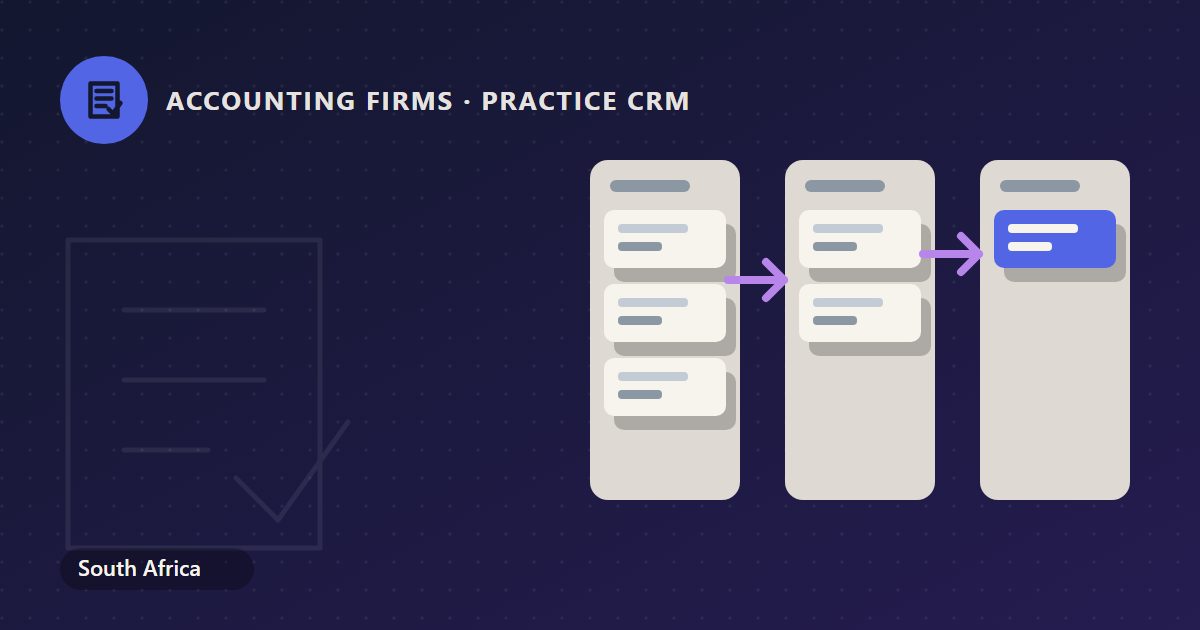
A small South African firm runs a campaign aimed at organisations that need their books examined every year. The leads that come back are a mixture: a soup kitchen run by a church committee, a two-partner law firm in a country town, a primary school's governing body, the trustees of a block of flats. Each needs something different, speaks a different language and will judge the firm on whether it understands their world.
Treating them as one undifferentiated list wastes the campaign. Achekam sorts such leads into four segments as they arrive, using what the person said about themselves, so that the right person at the firm can respond in the right terms.
Why these four segments
Non-profit organisations, attorneys' trust accounts, schools and bodies corporate have three things in common that make them attractive to many firms. They usually need the same work every year. They answer to someone beyond the tax authority: funders and members, the legal profession's regulator, parents and the education authorities, the owners in a sectional title scheme. And they often find it hard to locate an accountant who understands their particular rules.
Achekam's financial statement templates reflect some of this specialisation: for South African clients there are templates for non-profits, trusts and body corporates, among others. Attorneys are a distinct case again. The Legal Practice Council publishes the Legal Practice Act, the LPC Rules and the Code of Conduct, including the trust accounting rules in rule 54, and a firm pitching to attorneys should know them well before the first meeting.
The segments, in short:
| Segment | What the lead usually needs to hear about |
|---|---|
| Non-profit organisations | Funder reporting, governance, registration requirements |
| Attorneys' trust accounts | Trust accounting and the LPC's rules |
| Schools | Reporting to the governing body and parents |
| Bodies corporate | Reporting to owners and the scheme's trustees |
Sorted from the person's own answers
Captured leads are sorted into these segments from the person's own form answers. That applies to leads from the firm's web forms and from social media lead ads that arrive through the firm's Zapier lead hook, which lands Facebook or Instagram Lead Ads submissions in the pipeline.
Sorting from the person's own words is the safer design. The firm is not inferring that a lead is a school from an e-mail domain or a name; the person has said what they are. When a partner opens the lead, the segment reflects the lead's own description, which is also the description to use when replying.
Left unsorted rather than guessed
A lead that cannot be sorted is left unsorted rather than guessed. If someone writes only that they need "an accountant for our organisation", Achekam does not decide whether that is a church, a residents' association or a company.
Unsorted leads are not a failure; they are a prompt. Someone at the firm should read each one and either sort it by hand after a conversation, or treat it as a general enquiry. A guessed segment would be worse than none, because it would send a law firm a welcome letter about school governing bodies.
Make it part of the daily lead routine: the person who checks new arrivals also reads the unsorted ones.
Tailoring the welcome pack
Segments become most useful with the welcome pack. With the welcome pack switched on, each new connector lead is sent a welcome letter and a service proposal that names no fee, tailored by AI from a template a person approved once for that industry and service.
Several safeguards apply, and they matter more for specialised segments:
- The pack is off until switched on.
- It is held until the template is approved, and a partner must approve audit and review templates.
- The send is stopped if the tailored text adds a date, amount or percentage that is not in the template or the lead.
- The proposal has no accept link, so it opens a conversation rather than closing a deal.
A template written for a non-profit should talk about funders and governance; one for attorneys should talk about trust accounting. A generic template sent to all four segments throws away the advantage of sorting. Staff can also send a pack from the lead page, which is useful for leads someone has sorted by hand. The pack itself is explained in auto-replies and welcome packs for new leads.
Designing form questions that sort well
Since sorting depends on the person's answers, the questions on the form decide how well it works. Some practical guidance:
- Ask directly what kind of organisation they are, with the four segments and "other" as plain options, rather than leaving it to a free-text box.
- Use the words people use about themselves. A school bursar thinks "school", not "educational institution".
- Ask one question about the need, such as the year-end or whether a report is required by someone, so the first reply can be specific.
- Keep the form short. Every extra question loses some people before they press submit.
For leads from social media, the same principle applies to the questions in the lead form on Facebook or Instagram, which then travel through the Zapier hook; the set-up is in Facebook lead ads into the firm's CRM via Zapier.
Review last month's leads: how many were sorted, how many were left unsorted, and why. If the unsorted pile is large, the form's questions are the first thing to fix.
General guidance only, not advice on your own circumstances. Tax and payroll rules change: check the current position with the authority or your adviser.
