Converting a sponsor enquiry
What happens in the Events pack when a prospective sponsor's enquiry is converted, what to check before you convert, and which enquiries to close instead.
By Achekam · · 4 min read · For Events businesses in South Africa, Nigeria, Kenya
Launching soon. The Industry CRM add-on described in this article is launching soon. This article describes it as it will work at launch.
A marketing manager at a beverage brand fills in the form on your festival's website: "We'd like to talk about sponsorship for next year." A week later, a bank's events team phones about a conference you have not even announced. Sponsor enquiries arrive in odd ways and at odd times, and most of them never become a signed agreement.
In the Events & trade shows pack of Achekam's Industry CRM, an enquiry is a lead until you decide it is worth pursuing properly. Converting it is a single action that does several things at once, so it pays to know what those things are before you press the button.
Enquiries and how they arrive
Sponsor enquiries reach the CRM as leads, by one of three routes:
- Your website. You can design web forms, each with its own public address. A submission creates a lead, or adds to a recent lead with the same e-mail address. Forms start paused until you switch them on, suspected robot submissions are logged as spam, and the person submitting must accept your consent wording.
- Social media lead adverts. A Zapier lead hook with your own secret key lets Facebook or Instagram Lead Ads submissions land in your pipeline. There is no direct connection to Meta; Zapier carries the submission across.
- Your own team. Staff can type in an enquiry taken by phone or at a trade show. If its e-mail or phone matches a lead you already hold, Achekam names the existing lead and asks before creating a second one.
Each new lead gets a code that is never reused, which helps when two people from the same brand contact you through different channels. Staff can put dated follow-up tasks on a lead for themselves or a colleague, and see which follow-ups are overdue or due over the next seven days.
One conversion, several things at once
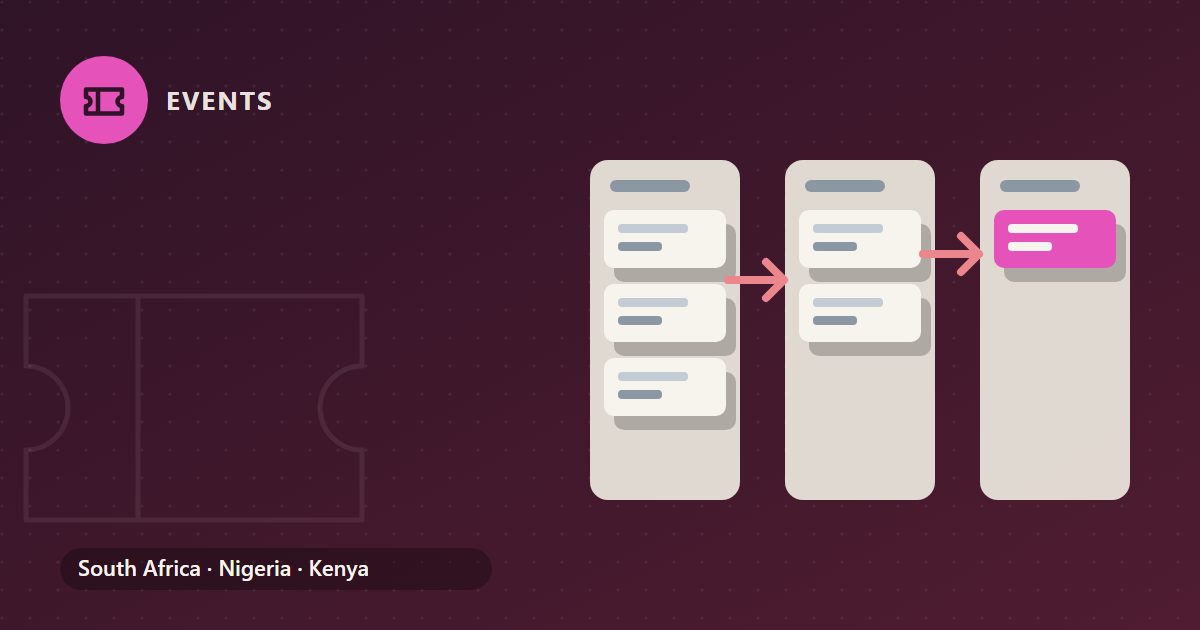
The Events pack keeps four kinds of record: Events, Sponsorships, Exhibitor booths and Vendor contracts. Converting a lead creates the customer and the pack's main record in one step, and starts that record's workflow. You do not create a customer, then a record, then a task list by hand.
For a sponsor, the work that follows is the pack's sponsor onboarding, which runs through:
- A sponsorship proposal.
- A sponsorship agreement, signed electronically.
- The sponsor's invoice.
- A request for the sponsor's logo and artwork.
- A checklist for every benefit in the package.
A workflow creates its tasks stage by stage, so converting today gives your team the proposal tasks now and the artwork request only when the agreement is done. Tasks can carry subtasks up to three levels deep, which helps when a proposal needs input from production, marketing and finance.
The onboarding workflow starts
Starting the workflow is useful but also a commitment: tasks appear on people's lists, and deadlines start to mean something. Some pipeline stages also wait for set conditions before a record can enter them, such as a customer being named, an amount being set or a signature being done. A sponsorship cannot be moved past the agreement on a handshake.
The agreement itself is starter wording. Every contract or agreement in the industry packs is marked as starter wording that the business must review before use, so have your adviser look at the sponsorship agreement before the first conversion, not after the first sponsor has signed it.
What to know before converting
Convert when the enquiry has become a real conversation about a specific event, not before. A short checklist:
- Is there a decision-maker? A junior coordinator asking for your deck is a lead. A brand manager with a budget asking about your gold package is a conversion.
- Is the event confirmed? Sponsors buy a specific date, audience and package. If the event itself is still a maybe, keep the enquiry as a lead.
- Is the company already a customer? If the brand exhibited last year, check the customer list before converting, so you do not end up with two versions of the same company.
- Who owns it? Decide who on your team will run the proposal, because the tasks will land on someone.
The pack sets the words the screens use, its record types, pipelines and workflows, so your team works with "sponsors" and "sponsorships" rather than generic sales terms. That only helps if people convert enquiries at the same point. Agree that point as a team.
Enquiries to close instead
Plenty of sponsor enquiries should never be converted: a student asking for free tickets in exchange for a post, a supplier pitching their services under the subject line "sponsorship", a brand whose product conflicts with a sponsor you already have. A lead that someone has worked cannot be deleted; close it as lost instead, with a short note on why. Next year, when the same brand comes back with a bigger budget, the history is there.
Investopedia's guide to customer relationship management describes the sales, service and forecasting processes a CRM is meant to cover. For a sponsorship team, the forecasting part depends on exactly this habit: converting only real opportunities and closing the rest honestly, so the pipeline you report to the board is one you believe.
Next steps
Set up your web form and lead hook, agree when an enquiry becomes a conversion, and have the sponsorship agreement reviewed before the season starts. What happens after conversion is covered step by step in onboarding a sponsor and tracking every benefit, and the review of the pack's agreements in reviewing the pack's agreement wording.
General guidance only, not advice on your own circumstances. Tax and payroll rules change: check the current position with the authority or your adviser.
